

GGW | Stay Informed | Subscribe: https://www.greenglamourworld.com/#section-subscription
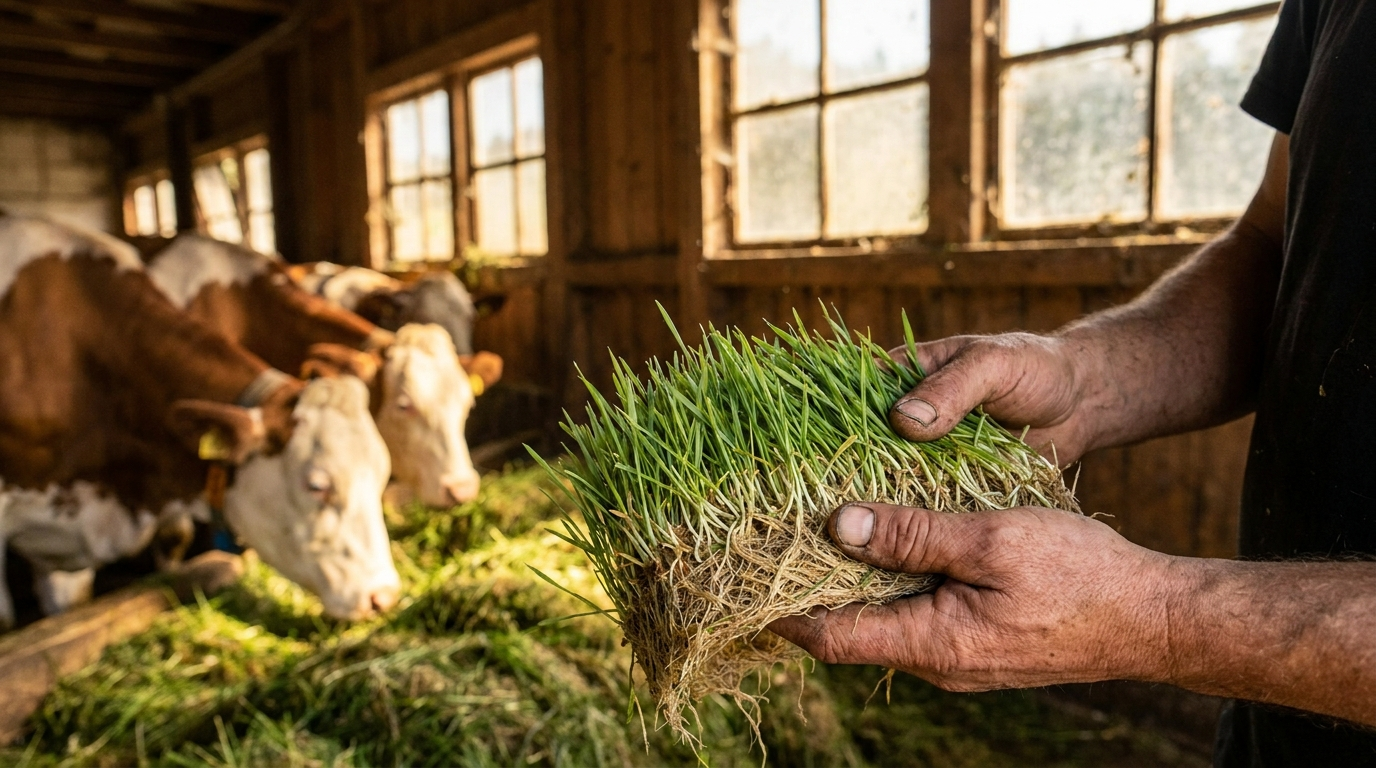
A growing number of farms are turning to hydroponic fodder — a method of sprouting grain into dense, nutrient-rich feed in stacked trays, indoors, without soil. From seed to harvest-ready fodder takes about a week.
The appeal isn't just speed. It's efficiency.
Traditional feed crops demand large tracts of land and heavy irrigation. Hydroponic systems flip that equation: water use can drop by as much as 90 percent, since the water feeding the trays gets absorbed directly rather than lost to evaporation or runoff. Because the trays stack vertically, a small indoor space can produce what would otherwise require several acres.
The output changes too. Fodder grown this way arrives fresh every week, year-round, regardless of drought, frost, or shifting seasons — and its nutrient density often gives livestock a healthier, more consistent diet than dried feed.
None of this solves agriculture's full resource problem on its own. But it points to where the bigger challenge actually lies: not simply growing more food, but growing enough food using far less land, water, and stability than farming has historically required.
As climate volatility and water scarcity intensify, systems like this may end up being less of a novelty and more of a necessity — proof that resilience in agriculture doesn't always come from expansion. Sometimes it comes from rethinking the process itself.
#HydroponicFarming #Agriculture #FoodSecurity #Sustainability #ClimateResilience #Livestock #Innovation #WaterConservation


