
Winner of the "Circular Fashion Competition"
at the recent Global Sustainable Fashion Week, held in Budapest in June 2025
“My stylistic approach: simple lines, clean cuts, and garments that anyone can wear— practical but never boring.”
Congratulations on winning the “Circular Fashion Competition" at the recent Global Sustainable Fashion Week, held in Budapest in June 2025! Can you tell us what this recognition means to you, both personally and professionally, as an ethical fashion designer?
First of all, it was such a surprise! I never imagined I would be selected—let alone win the award! Receiving the prize in Budapest was truly special because I had the chance to meet many people who, like me, work hard every day to promote the concept of sustainable fashion. This recognition for the effort I put in daily is a sign that I am on the right path, despite the countless challenges I face.
More and more people are embracing the idea of healthy and ethical clothing—a world built on people’s work, not on exploitation; of fabrics that are not harmful; of prices that reflect the true value of a garment; and of transparency in sales.
During the fashion show in Budapest, I had the opportunity to connect with designers from all over the world, and it was encouraging to see that I am not alone on this journey—one that is often uphill, but at times deeply rewarding. Moreover, after many years of participating in fashion shows that didn’t bear my name, I must admit, with a bit of pride, that stepping onto the runway at the end of the show was emotional— perhaps the right culmination of this project. I hope this is just the beginning—and what a great beginning it is!
I will never be able to thank the jury enough for selecting me, and I’m truly grateful for all the work done by the organizers, especially Gaby (Dr. Gabriella Walek), Founder of #GSFW, who was incredibly welcoming in Budapest. I hope to return next year to pass the torch.
What was the inspiration behind the collection or concept that earned you the award, and how does it reflect your philosophy of sustainability and circularity in fashion?
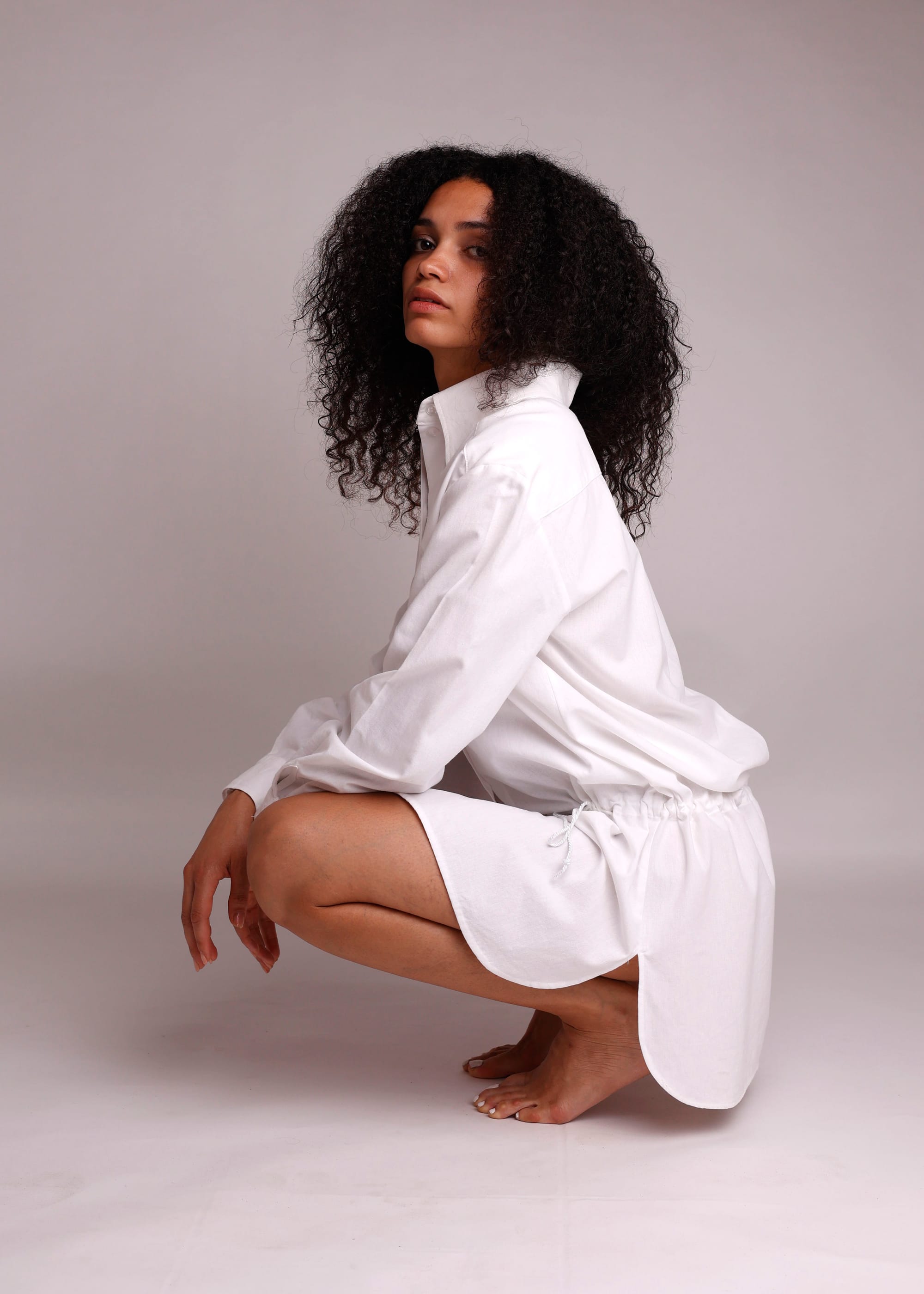
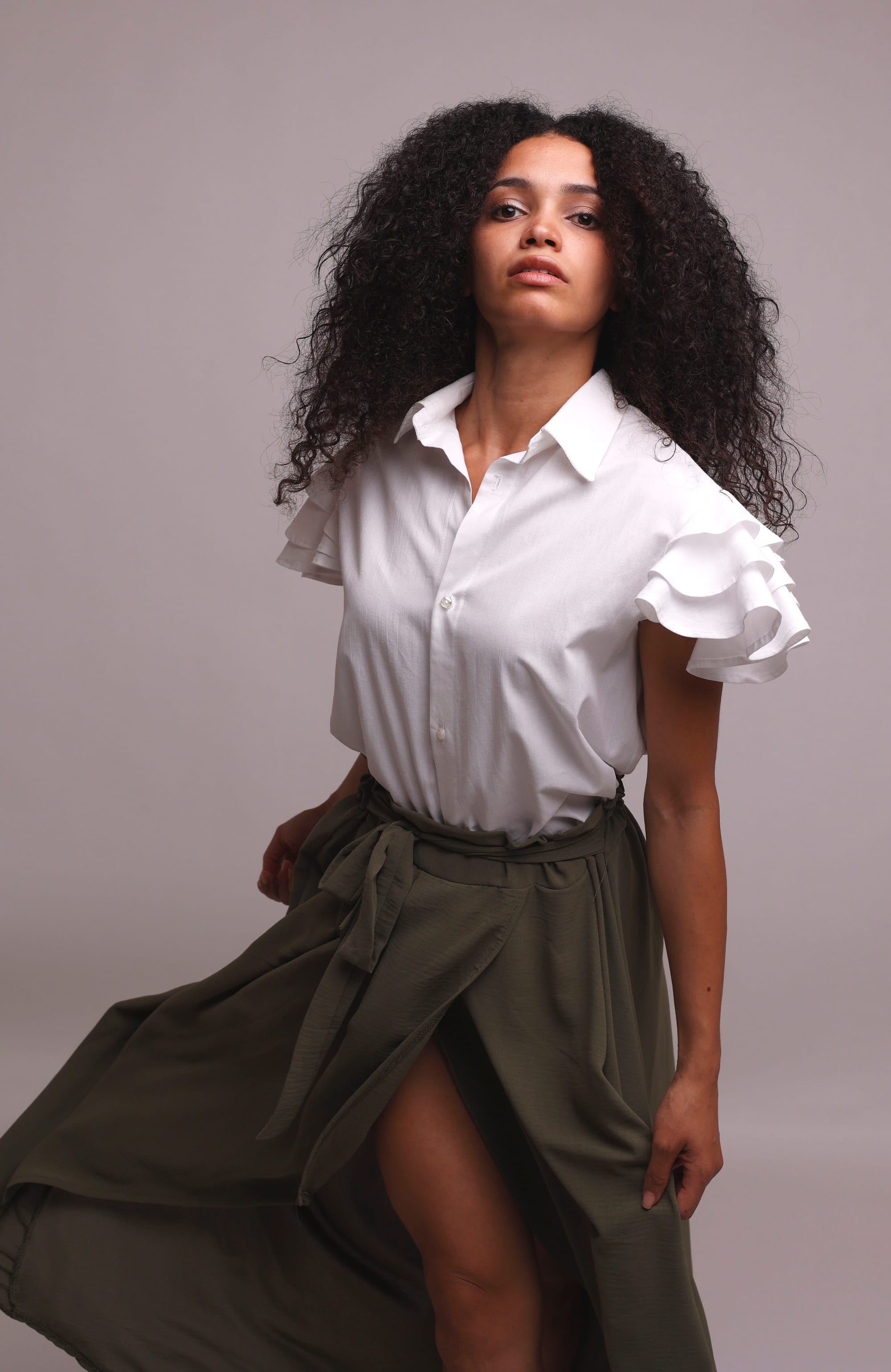
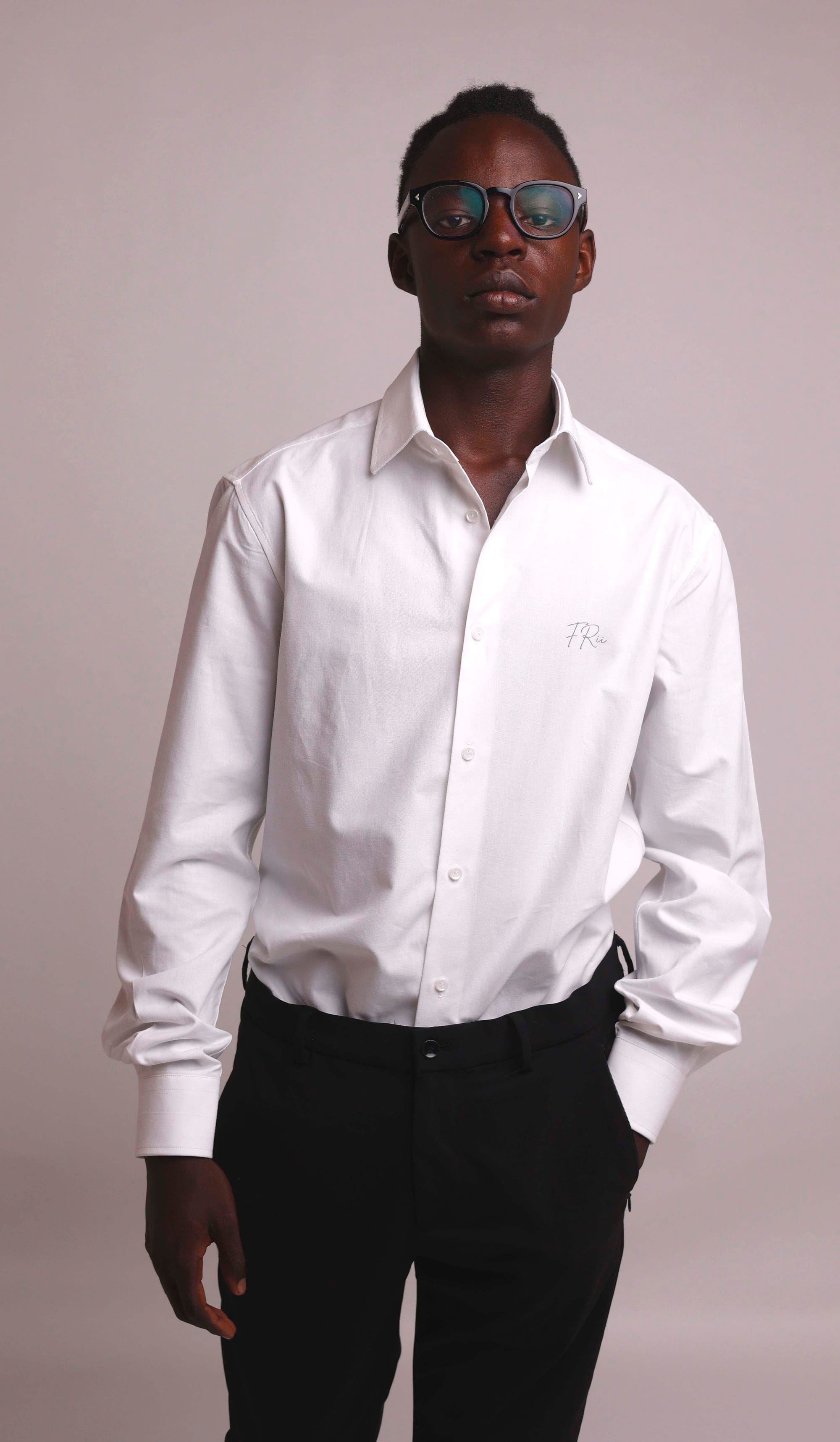
I believe the words of the jury best express my stylistic approach: simple lines, clean cuts, and garments that anyone can wear—practical but never boring. The basic shirt becomes a musthave piece, suitable for any time of day or season. Meanwhile, the more elaborate designs show how even a humble material, like a discarded hotel bedsheet, can be transformed into something unique and beautiful.
We’re used to seeing recycled collections that are often too eccentric for a broader audience— full of color and fabric clashes. Young designers are very talented at creating show-stopping pieces for the runway, but behind the show, garments must also be sellable.
I want my shirts to be accessible—to be purchased and worn by the office worker just as much as by the young professional heading out for a night with friends. I like to imagine that the first reaction people have when seeing a FRii Shirt collection is: ‘Wow! Beautiful, practical, and ethical!
Many designers are exploring new ways to integrate sustainability into their creative process. How do you balance aesthetics, craftsmanship, and ethical practices in your work?
Being an eco-designer today in a fast fashion world is a real challenge. Sustainability starts at the design stage—you have to think about the future of the garment: how long will it last? Where will it end up? Who is it made for?
That’s why every FRii Shirt model must reflect the style of its time but also stand apart from fleeting trends. It has to be something you can wear and re-wear, year after year.
Craftsmanship is probably the aspect I focus on the most: garments must be impeccably made, with no flaws—each piece crafted with care by skilled tailors. From textile waste to a highquality garment: true Italian sartorial craftsmanship.
The ethical process is transparent throughout every stage of production. There are real people behind every shirt, working in fair and dignified conditions. I’ve been fighting against wage exploitation for many years. And beyond that, it’s a 100% Made in Italy product (truly!)—from the bed sheets to the final production. That, too, is an added value.
I want my shirts to be accessible—to be purchased and worn by the office worker just as much as by the young professional heading out for a night with friends. I like to imagine that the first reaction people have when seeing a FRii Shirt collection is: ‘Wow! Beautiful, practical, and ethical!
As an Italian designer, how does your cultural heritage influence your work—especially within the global conversations on sustainable luxury and innovation?
Being a small Italian designer in Italy comes with both advantages and challenges. We’re constantly surrounded by a culture of beauty— whether it’s the architecture of our cities or the way fashion is lived in the streets. I live in Tuscany, where the natural landscape blends with human-made beauty. This kind of environment inevitably influences anyone who creates.
At the same time, we live under the shadow of the great names—the legacy of Italian fashion that gave ‘Made in Italy’ its prestige. The comparison with icons like Valentino, Armani, Prada, and Ferré will always exist—and is almost impossible to surpass. As a designer who lived through the 1990s and studied the golden age of Italian fashion, I can only be grateful for the heritage they left us, for what they taught me, and for the passion they inspired.
One of my greatest sources of inspiration, even today, remains Ferré’s shirts: pure architectural mastery in the fluid lines of fabric. Unfortunately, I’ve also observed how Italy still struggles to fully embrace a slower, more circular fashion system. Many companies continue to produce abroad due to lower labor costs, when instead, Italian manufacturers should be supported and encouraged—especially as the textile sector has been in crisis for years. We need to bring value back to local production, and show that sustainable luxury can (and should) be rooted in our traditions, not outsourced.
I want my shirts to be accessible—to be purchased and worn by the office worker just as much as by the young professional heading out for a night with friends. I like to imagine that the first reaction people have when seeing a FRii Shirt collection is: ‘Wow! Beautiful, practical, and ethical!
Looking ahead, what message do you hope to convey to the fashion industry and consumers through your work? And what future projects or collaborations are you most excited about?
The message of FRii Shirt is loud and clear: anything can be reused. I want to help educate younger generations to see things from a different perspective. An old fridge can become a bookshelf, a chair can be turned into a nightstand, and a bedsheet… can become a shirt! All it takes is an open mind. That’s what an artist does—they see with different eyes.
Through my work, I hope to inspire a shift in mindset: from wastefulness to creativity, from overconsumption to value. We don’t need to constantly produce new materials to create beauty—we just need to reimagine what we already have.
As for future projects, I’m excited about exploring new collaborations with other sustainable brands, artists, and artisans who share this same vision. I’m also working on expanding the FRii Shirt collection with pieces that continue to tell stories of transformation—garments with a past, a soul, and a future. There’s so much more to come, and I’m excited to keep walking this path, one shirt at a time.
Creativity can be taught—just like respect for the environment and for people. I’m a mother, and I’ve always believed in educating my son not through words, but through actions. If I do something good, there’s a greater chance he will, too. That’s why FRii Shirt is a message before it’s even a product. It represents a way of thinking, of acting with intention, of showing that sustainability and creativity aren’t abstract concepts—they’re choices we make every day, in how we live, consume, and create.
*Note: The International Circular Fashion Competition is organised by Circular Fashion Incubator CIC (UK), founded by Andrea Benahmed Djilali.
The award ceremony, celebrating winner Francesca Riillo and the finalists, was held during the International Circular Fashion Week Conference in Leeds, UK, with the prize provided in partnership with Global Sustainable Fashion Week (Budapest).


Contact info:
FRANCESCA RIILLO
https://www.instagram.com/frii.shirt/