

Emil Pettersen’s Journey Turning Waste into Worth — Green Glamour World Feature
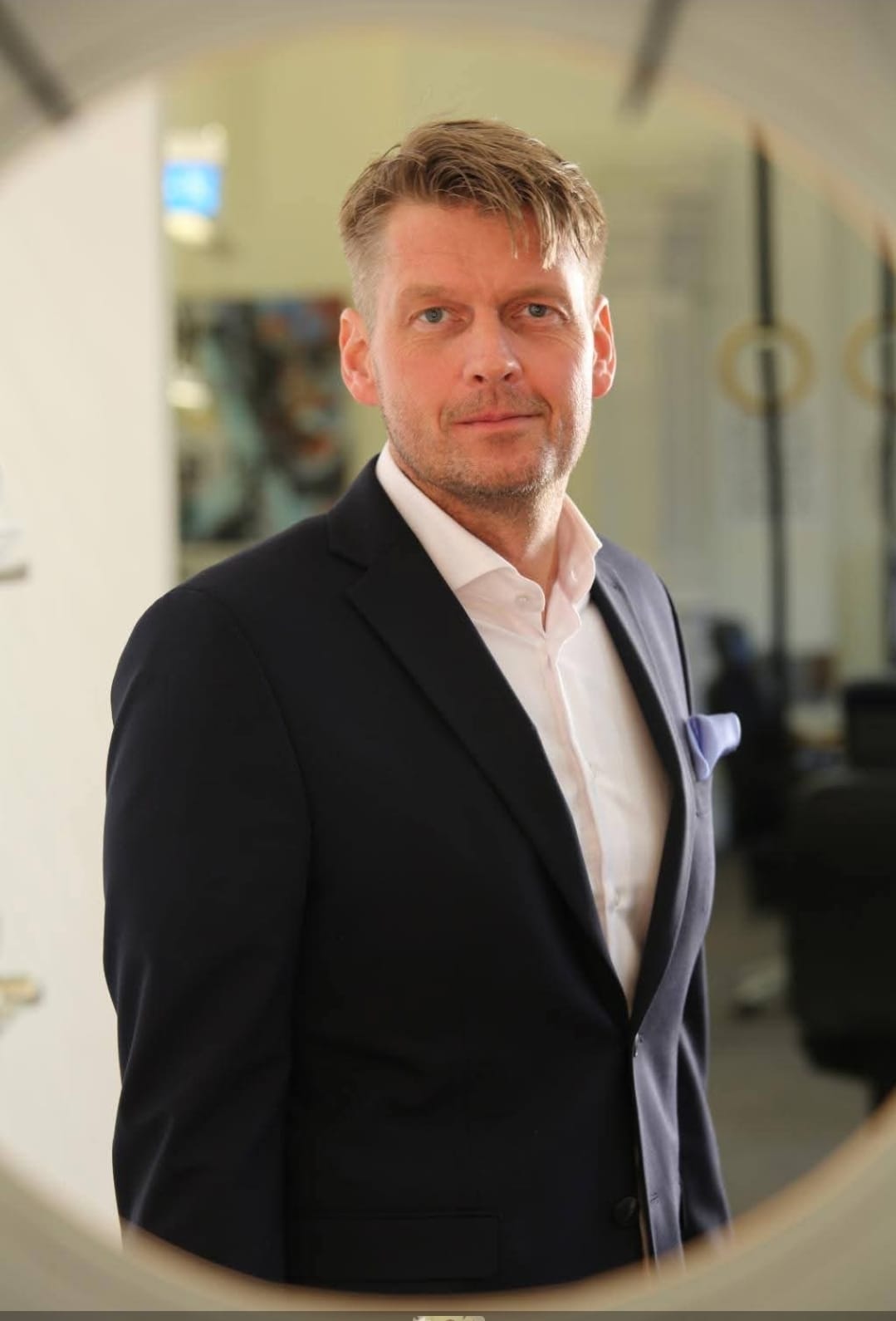
My Journey Turning Waste into Worth
I didn’t begin as an environmentalist. My background was in business and systems—public transport, logistics, smart cities—worlds where you measure results, not good intentions.
Then I started plogging. It’s a Swedish habit: you jog, and you pick up litter along the way. Every time I bent down for a squashed bottle or candy wrapper, I felt both satisfaction and frustration. Why was this here at all? Why did its story have to end in a ditch?
Somewhere between those runs and those questions, an idea crystallized: what if plastics weren’t waste, but raw material?
This wasn’t a sudden conversion. Back in the late 1990s, I studied Corporate Social Responsibility at business school in Oslo, long before it became a mainstream concern in Scandinavia. That training shaped my view: sustainability isn’t a side project or a PR exercise — it has to be embedded in how industries actually work.
Years later, that perspective became the foundation for Reparell AB.
What if we treated them like any industrial feedstock— defined, characterized, and engineered? That thought has guided my work ever since.
ReparellAB: Fashion That Lasts
I founded Reparell AB with a simple principle: the most sustainable garment is the one you don’t have to replace. Fashion can be expressive and aspirational, but it doesn’t need to be disposable.
Our role was to make better choices easy and available for companies — whether they wanted sustainability as part of their brand story or needed it documented for their LCA requirements.
We designed timeless cuts and built garments for durability, proving that fashion could meet both branding and compliance needs without compromise. Repair and refurbishment were part of the model too, not as nostalgia, but as practical tools to extend a garment’s life when needed.
Pragmatic circularity beats decorative “green” slogans every time.
hat approach led to partnerships with brands who wanted sustainability not just as marketing but embedded in what people actually wear.
One of the most inspiring has been Pater Noster, the iconic lighthouse-turnedresort off Sweden’s west coast.
It’s a destination celebrated for its stark beauty and maritime heritage—wind, rock, and sea in pure form.
For Pater Noster, we created apparel from ocean-recovered waste: shorts, Tshirts, and everyday wear designed to be weathered and lived in. Guests weren’t handed novelties; they wore quiet statements: we don’t throw things away, we put them back to work. The collection matched the site’s ethos— minimal, considered, built to last—while proving that circular materials can meet exacting standards of comfort and finish.
Projects like this became our test bed. Could sustainability feel natural, not performative? Could aesthetics and durability coexist with circular inputs? The answer was yes.
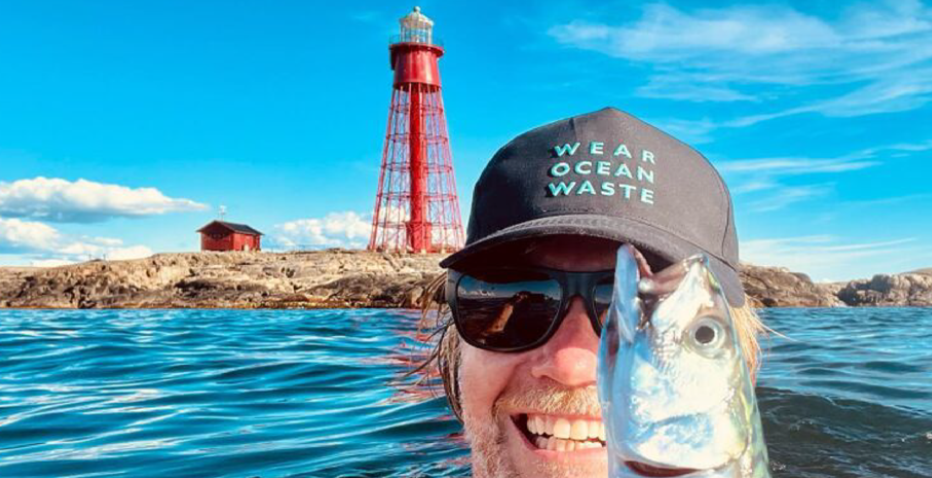
Pater Noster is an exclusive boutique hotel on a remote Swedish island, built around a legendary 19th-century lighthouse. With just a few rooms, private dining, and sweeping sea views, it offers a rare blend of luxury and solitude. Internationally awarded for design, hospitality, and setting, it attracts discerning travelers seeking privacy, authenticity, and world-class service. Even the staff uniforms and guest merchandise tell the story—crafted from recycled ocean waste, weaving sustainability into the soul of the island. For more information see paternoster.se.
Beyond Symbolism: Fixing the Feedstock
Designing better garments is one thing. Fixing raw materials is another. The fashion and plastics industries are constrained by what goes in at the start. When the input is inconsistent or degraded, you pay for it—with quality issues, limited applications, and excess waste.
That’s why we launched Reparell Innovation. Our mission: manufacture industrial-grade raw materials from undervalued plastic waste.
Not downcycling. Not “feel-good” recycling. Real feedstock.
We focused on degraded PET—the kind pulled from rivers and waterways that industry usually rejects. For two years in Gothenburg, we worked with governmental laboratories and research grants, honing the fundamentals: sorting strategies, thermomechanical processing, and molecular chain extension to rebuild plastic performance.
In plain terms, we take broken polymer chains and help them “relink,” so the material behaves like a high-quality input again. We tested blends, additives, and process conditions; we measured viscosity, impact, and crystallinity; we obsessed over stability and repeatability. Because if you can’t run it at scale, you haven’t solved the problem.
Where the River Meets the Factory
A lab can prove a concept, but industry changes the world. The big step was moving from controlled experiments to full-scale production in Albania, a country where rivers overflow with plastic waste.
Our model is deliberately local and modular: place production near the waste streams, stabilize quality, and ship value instead of exporting trash. In Albania, degraded PET collected from rivers becomes our feedstock. We clean, sort, process, extend, and pelletize to tight specifications. Every ton that hits our extruder is a ton kept out of ecosystems or incinerators.
To close the loop, we partnered with Everwave, the German innovator in onwater trash recovery.
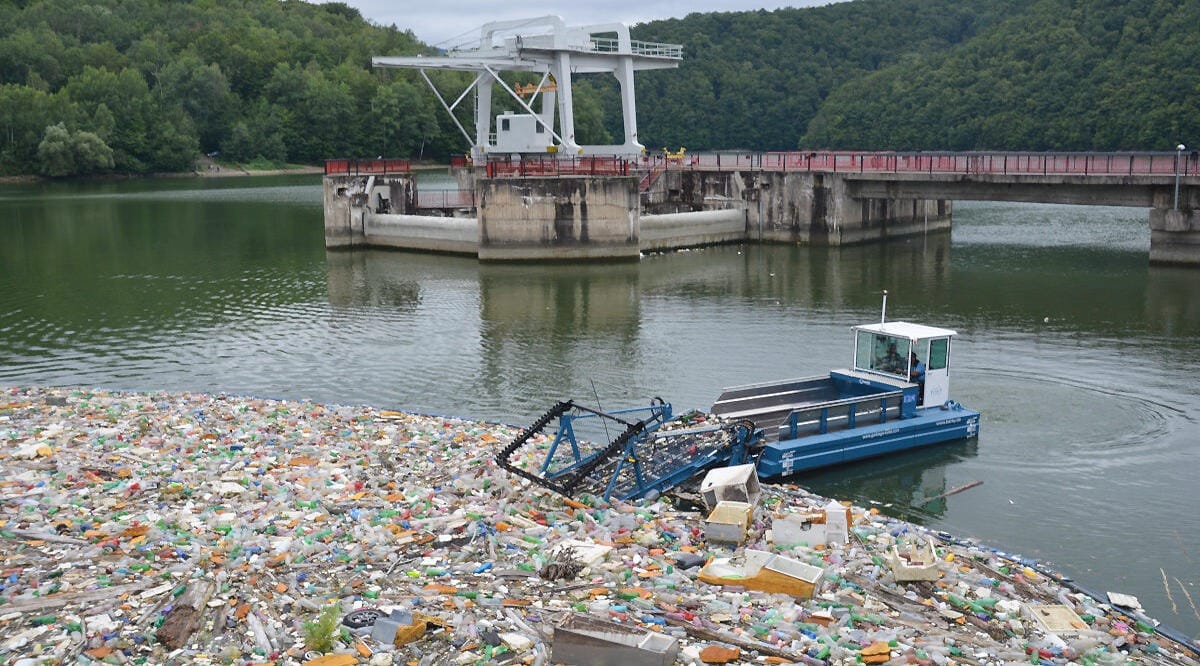
In Kukës, Albania, Reparell and Everwave are building the next stage of the EndOfWaste project. The facility is planned to be operational in Q2 2026, and will transform plastic waste collected upstream — before it enters the Mediterranean — into highquality industrial raw materials. A local solution with global impact, proving how international collaboration can secure the resources of tomorrow.
Their systems intercept waste at rivers and shores; we convert it into industrial inputs. The difference is moving from sporadic cleanups to a bankable supply chain. This isn’t charity. It’s a commercial operation built to stand on its own economics. If the material performs and the price point is right, the market will adopt it. That’s its strength—and the only way to scale without depending on endless subsidies.
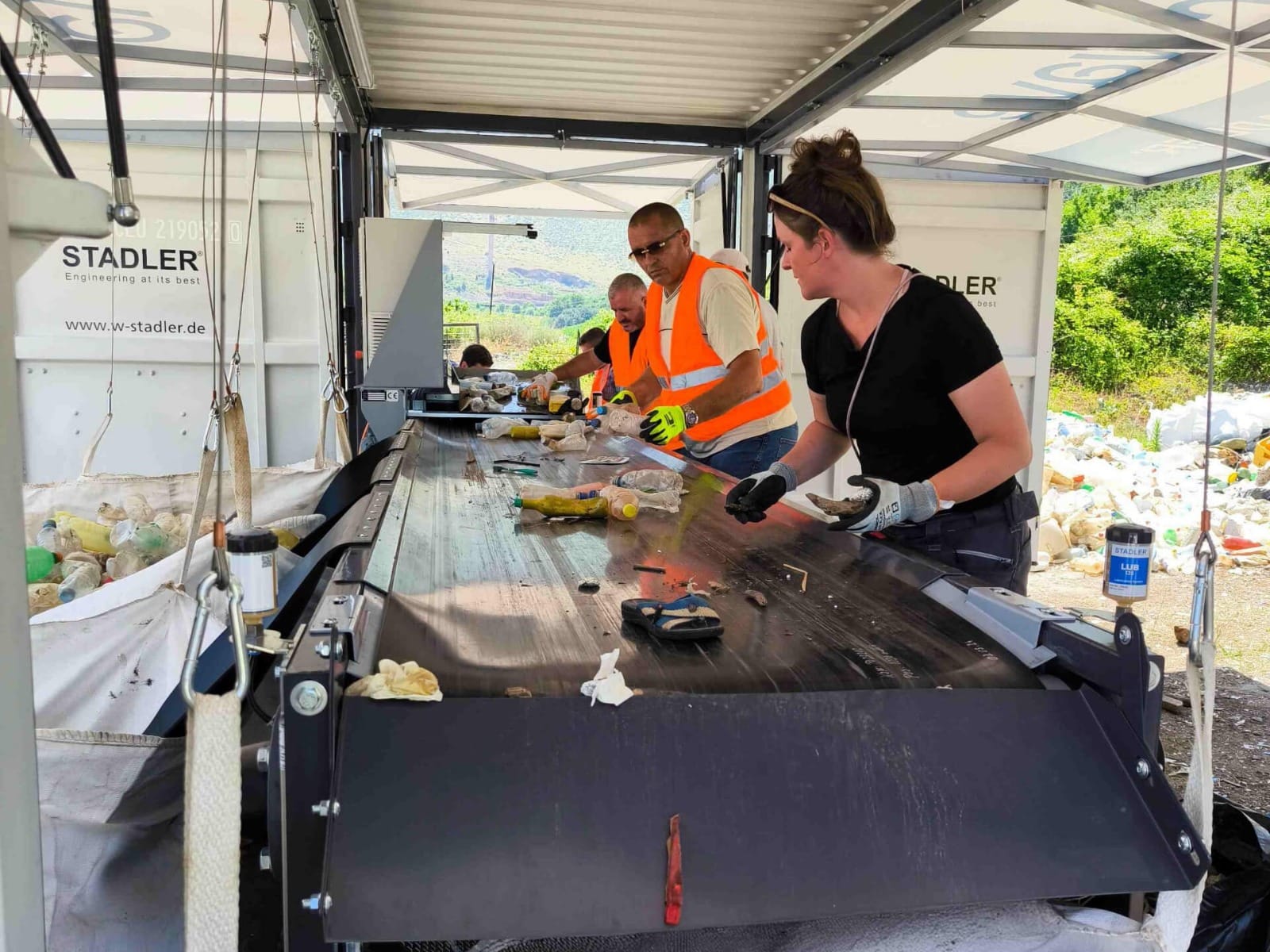
Plogging, Scaled
When people ask why I still plog, I tell them it’s not about jogging—it’s about pattern recognition. On a morning run, you see where bottles collect, where bags snag, where bins overflow. Each discarded item was once something of value. Value doesn’t disappear; it gets misplaced.
Reparell AB channels that principle into garments designed for longevity. Reparell Innovation applies it at industrial scale, turning misplaced value into trusted feedstock. Both are rooted in the same belief: stop treating sustainability as a mood and start treating it as an operating system.
What “Good” Looks Like
For circularsystems to succeed, three conditions must hold:
1. Material Integrity – Recycled polymers must consistently hit the mechanical and processing specs industry demands. If quality drifts, the system collapses.
2. Economic Logic – The model must make money. If not immediately, then on a clear path to scale. Real transformation requires cash flow, not just press releases.
3. Proximity & Accountability – Production must be near the waste and the demand. Proximity reduces emissions and increases transparency. Local partners know the problems—and the solutions.
Our Albania site checks these boxes: modular capacity, short supply lines, and built-in traceability.
Anyone can say “recycled”; we prefer to prove it.
Fashion, Reimagined atthe Source
Here’s the connection back to clothing: fashion won’t be fixed by consumer choices alone. It will be fixed at the material source. If we can supply highquality recycled polymer—reliably, locally, and at scale—we unlock better yarns, fabrics, and garments by default.
That’s how our Pater Noster collection was conceived: not as novelty, but as a prototype of a system where circular feedstock is the baseline. Guests felt the difference—the resilience, the finish, the weight—without needing an explanation. That’s how it should work: invisible competence, visible quality.
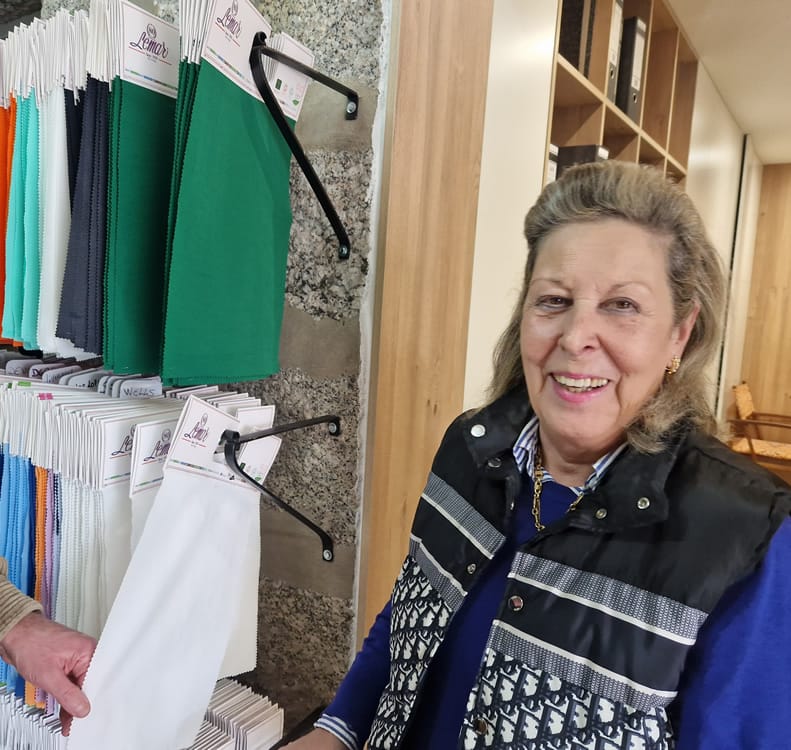
Manuela Araujo , fourth-generation owner of Lemar in Portugal, is not only a dear friend but also Reparell’s very first partner. Lemar’s pioneering work has been instrumental in proving that waste can become value, developing highquality fabrics from a wide range of end-of-life materials. For more on Lemar’s sustainable fabric collections, see lemar.pt/sustentabilidade.
Lessons Along the Way
Plogging taught me to start small; industry taught me to finish big. Both matter. Individuals shift culture; factories change outcomes.
Speed & Scale: The planet’s problems won’t wait for perfect solutions. Build now, improve fast, replicate widely.
Re-engineer Materials: Good intentions won’t fix broken inputs. We need solutions at the molecular level.
Accessibility: If solutions aren’t affordable and available, they aren’t solutions— they’re headlines.
The RoadAhead
We’re far from finished. We’re expanding capacity, targeting new waste streams, and partnering with manufacturers who want secure circular materials without compromising performance.
The aim is clear:
to become a trusted industrial supplier whose products happen to be circular. In the long run, that’s what competitiveness will require.
And YES, I still plog.
I still pick up bottles, still feel that flash of irritation—and equal optimism. Irritation because the system failed; optimism because we can build better ones. What starts as litter in a hand can end as material with a future. That’s the story I’m honored to help write—in labs, factories, and yes, along the trail by the sea.
Global Perspective: From Localto Global Boardrooms
ISustainability isn’t just a local experiment — it’s a global conversation. That’s why I’m proud to serve on the board of Global Sustainable Fashion Week (GSFW), alongside President Gabriella Mányi-Walek, who founded the movement in Budapest.
GSFW brings together designers, researchers, and industry leaders from every continent to rethink fashion from the ground up. For me, it’s not just about presenting projects — it’s about shaping the frameworks where new rawmaterial solutions can take root and scale worldwide.
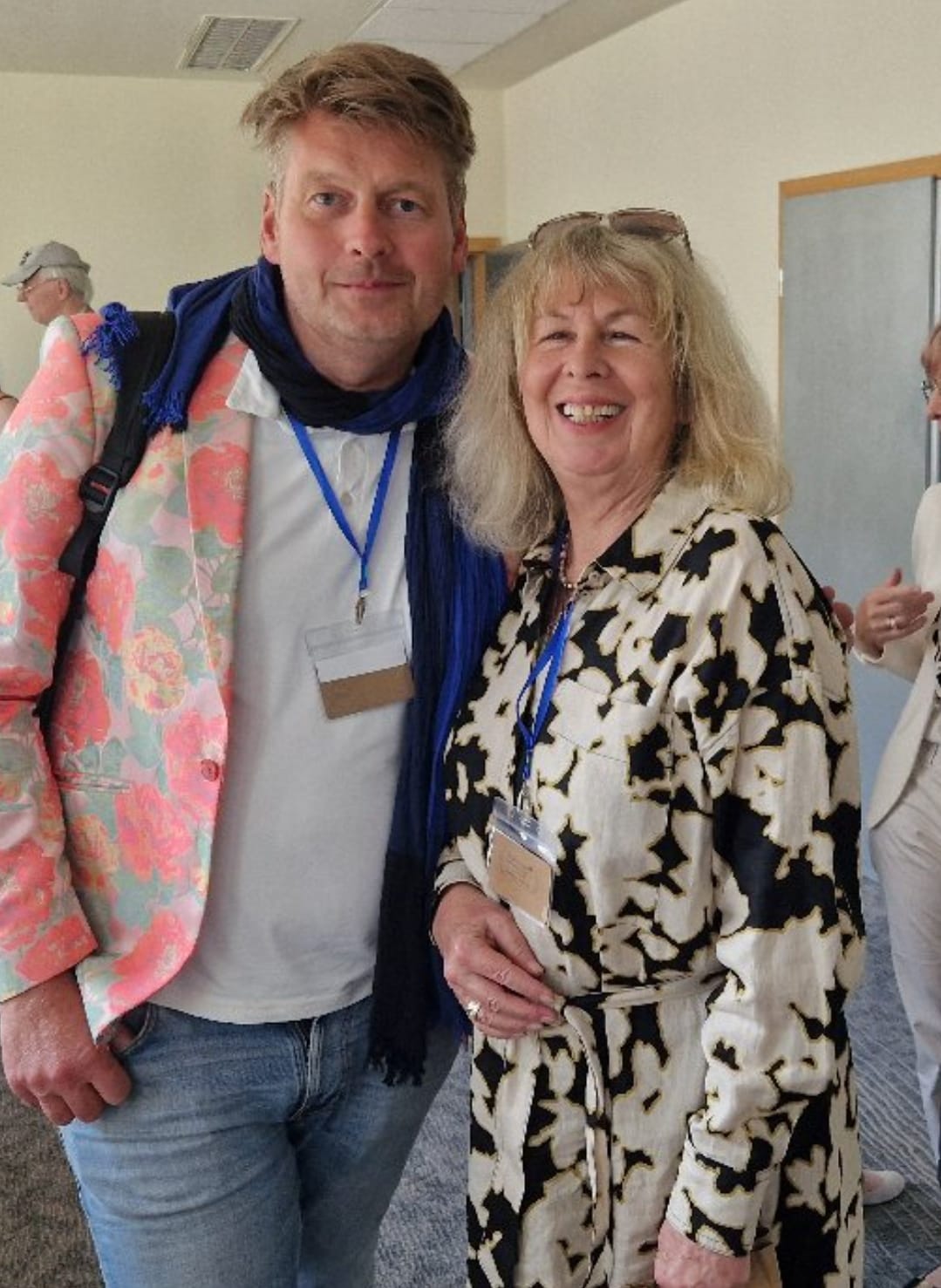
Emil Pettersen, Board Member of GSFW, with Gabriella Walek, President of GSFW www.reparellab.se


