

Imagine growing materials instead of manufacturing them through conventional industrial processes.
Across the biotechnology sector, researchers are investigating how fungi can help transform agricultural and textile waste into useful new materials.
At the center of this revolution is mycelium, the intricate network of fungal filaments that grows beneath mushrooms.
A scientific study published in March 2026 in Cleaner Materials demonstrated how oyster mushroom mycelium could grow through shredded cotton, polyester, and mixed textile waste to create composite blocks.
Researchers identified promising flame-retardant properties and potential applications in sustainable construction materials. The research remains at the proof-of-concept stage. ScienceDirect
Why does this matter for fashion?
Mycelium is already being explored as an alternative to conventional leather, while new research suggests that fungal materials may have applications far beyond clothing.
Biotechnology is opening possibilities for accessories, interiors, packaging, and architectural products.
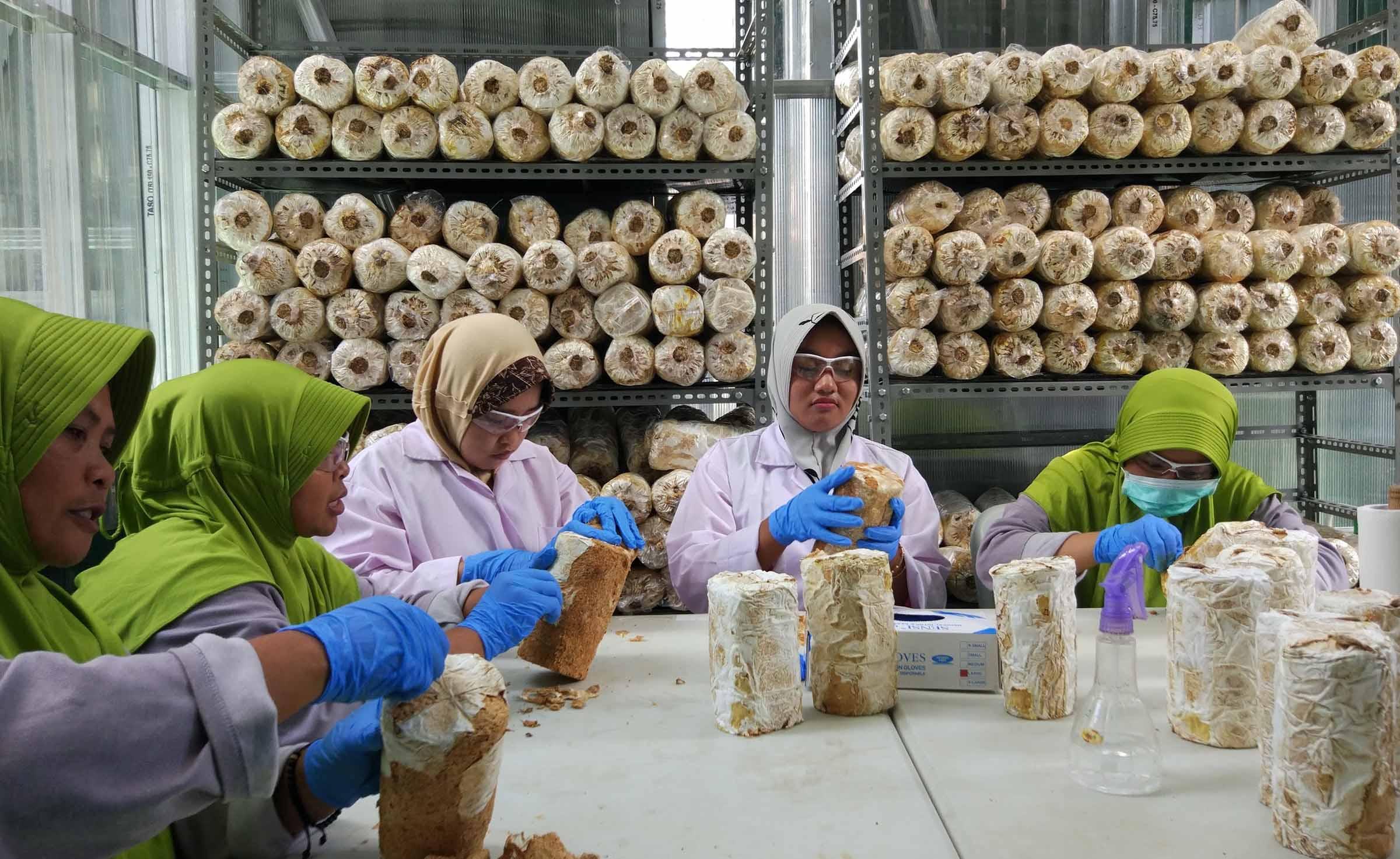
Unlike traditional manufacturing, which frequently relies on extracting and processing virgin resources, certain biofabrication methods can incorporate existing waste streams.
However, not every mycelium-based product is biodegradable or environmentally superior. Finishes, binders, energy consumption, and manufacturing scale all influence its environmental footprint.
For designers, the opportunity is extraordinary: materials whose textures, structures, and properties can be influenced during growth.
The laboratory is becoming an increasingly important creative space.
The GGW Perspective: The next revolution in sustainable design may begin not in a factory, but with a living organism.


