

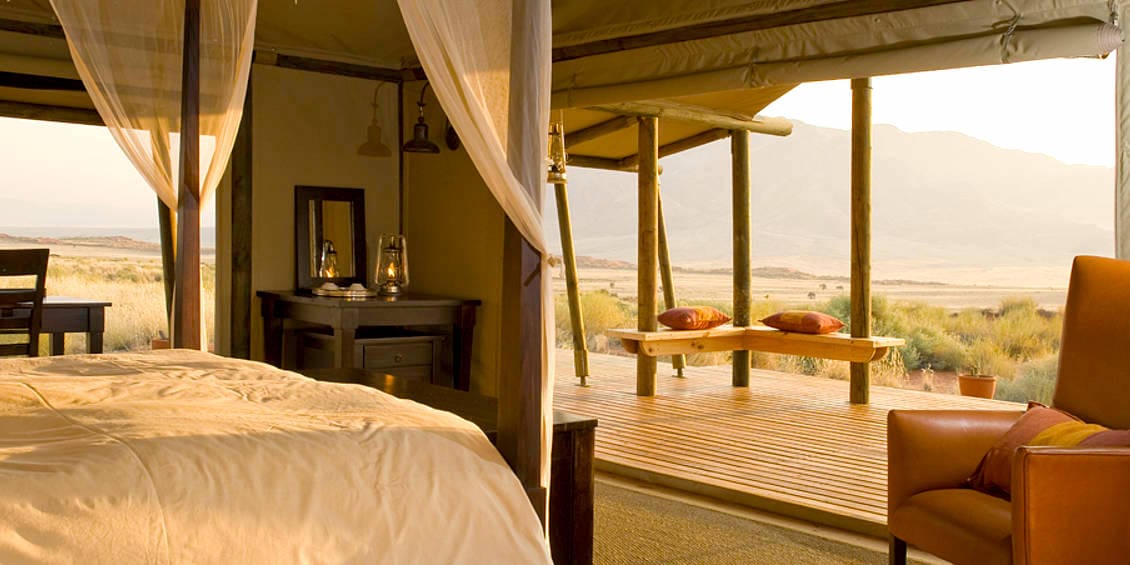
Situated in the NamibRand Reserve, Wolwedans is far more than a hospitality destination — it is a champion of inclusive conservation and community empowerment through education. Founded in 1995 with just four tents by Albi and Stephan Brückner, it has since grown into a leading model of sustainable tourism, now encompassing five properties and impactful initiatives such as the Desert Academy. Guided by a conscious ethos, Wolwedans continues to evolve with a strong commitment to transformation and progressive sustainability. It is also proudly certified as a Global Ecosphere Retreat®.
Wolwedans has reimagined the tourism landscape with the AridEden Project and its Vision 2030, both dedicated to fostering sustainable tourism, resilient economies, and long-term conservation. Its Matrix 25 framework integrates the 5Cs — Commerce, Conservation, Community, Culture, and Consciousness — grounding all efforts in a balance of people, planet, and profit. At the heart of this philosophy are programmes that offer vocational training, support desert-based economies, and cultivate valuesdriven leadership.
Through these initiatives, Wolwedans aims to inspire global change, nurture well-being, and uphold sustainability as its core essence.


CONSERVATION
Wolwedans has planted over 200 trees through its Adopt a Tree programme and removed more than 2,500 km of old farm fencing and scrap as part of a major landscape restoration initiative.
COMMUNITY
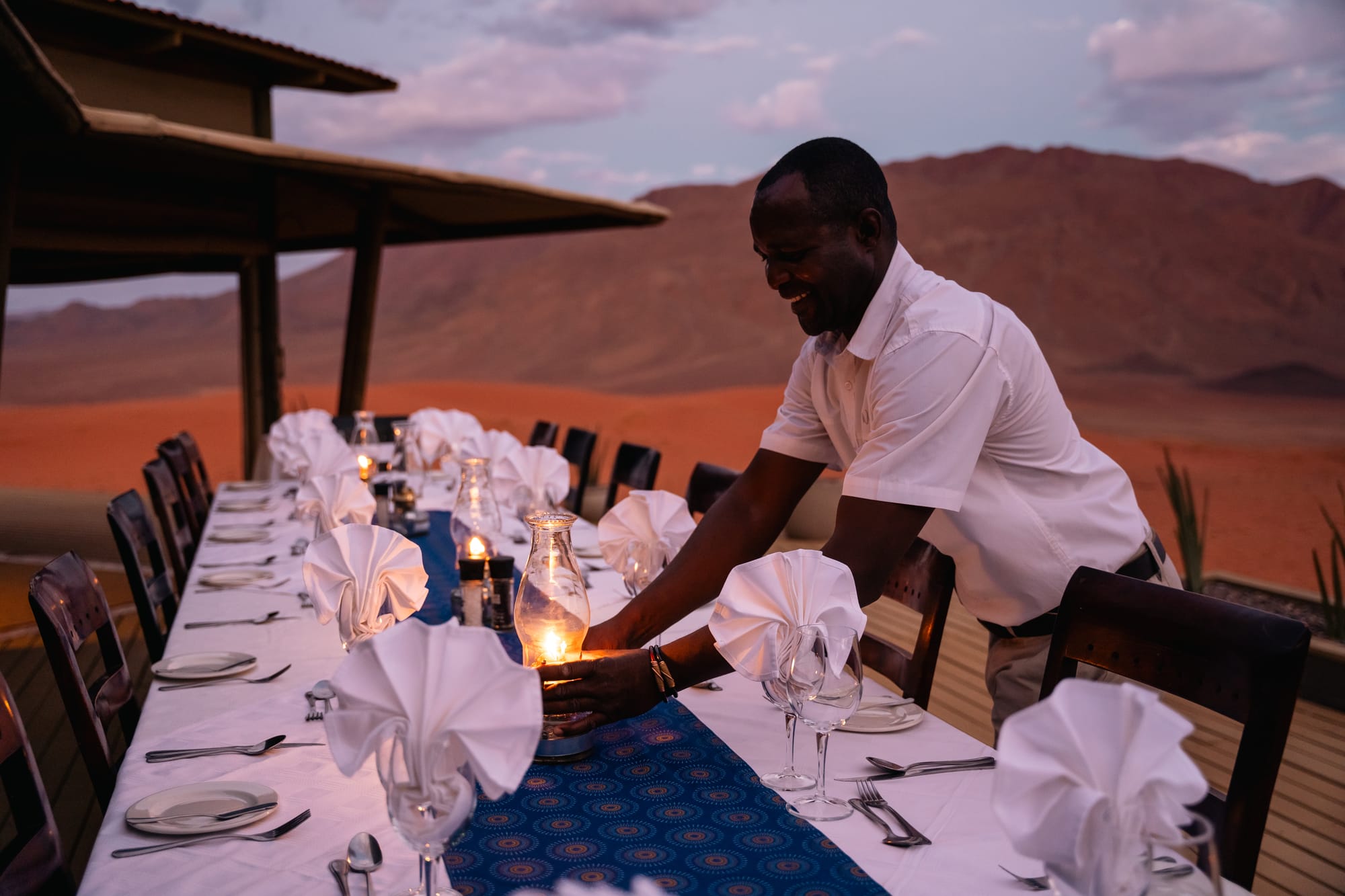
The team is entirely Namibian, with future leaders trained through the Desert Academy and Hospitality Training School. Guests are also invited behind the scenes to learn about Wolwedans’ operations and commitment to transparency.
CULTURE
Wolwedans nurtures a strong internal community, continually improving living conditions — including rebuilding employee housing. Guests experience local lore and desert traditions through immersive walks with local guides.
COMMERCE
The AridEden Project sets ambitious sustainability targets across all operations. At Wolwedans Village, 80% of water is recovered, treated, and reused through a central wastewater system.
For more information visit: