

A collaboration: Lylle Lisbela, Zoë Melo, and Brigitte Perreault
Personal Journey
You grew up in the Amazon — how has your upbringing shaped your perspective on fashion and sustainability?
It was something common, mainly respecting nature for what it is, considering that nonhuman beings are just as important as us humans. My experience in the community makes me understand that we are a collective movement. And today I can bring a little of that to fashion.
Can you share a pivotal moment in your life that led you to create fashion rooted in ethical practices?
This is something I've never told anyone, but in 2020, while I was still designing my first collection in São Paulo, I was looking for a professional to make a test piece and found a contact on social media.
I went to the address where we had arranged to meet, and there I found an entire building full of Bolivians working on various stages of sewing clothes, without basic conditions and sometimes without even the right to use the bathroom. This affected me deeply, and from then on I had to search within myself for other possible paths.
“The materials come from my territory, the Alto Rio Negro Indigenous Land.”
Creative Process & Materials
Your designs are often described as deeply connected to nature. Can you walk us through how you source and select your materials?
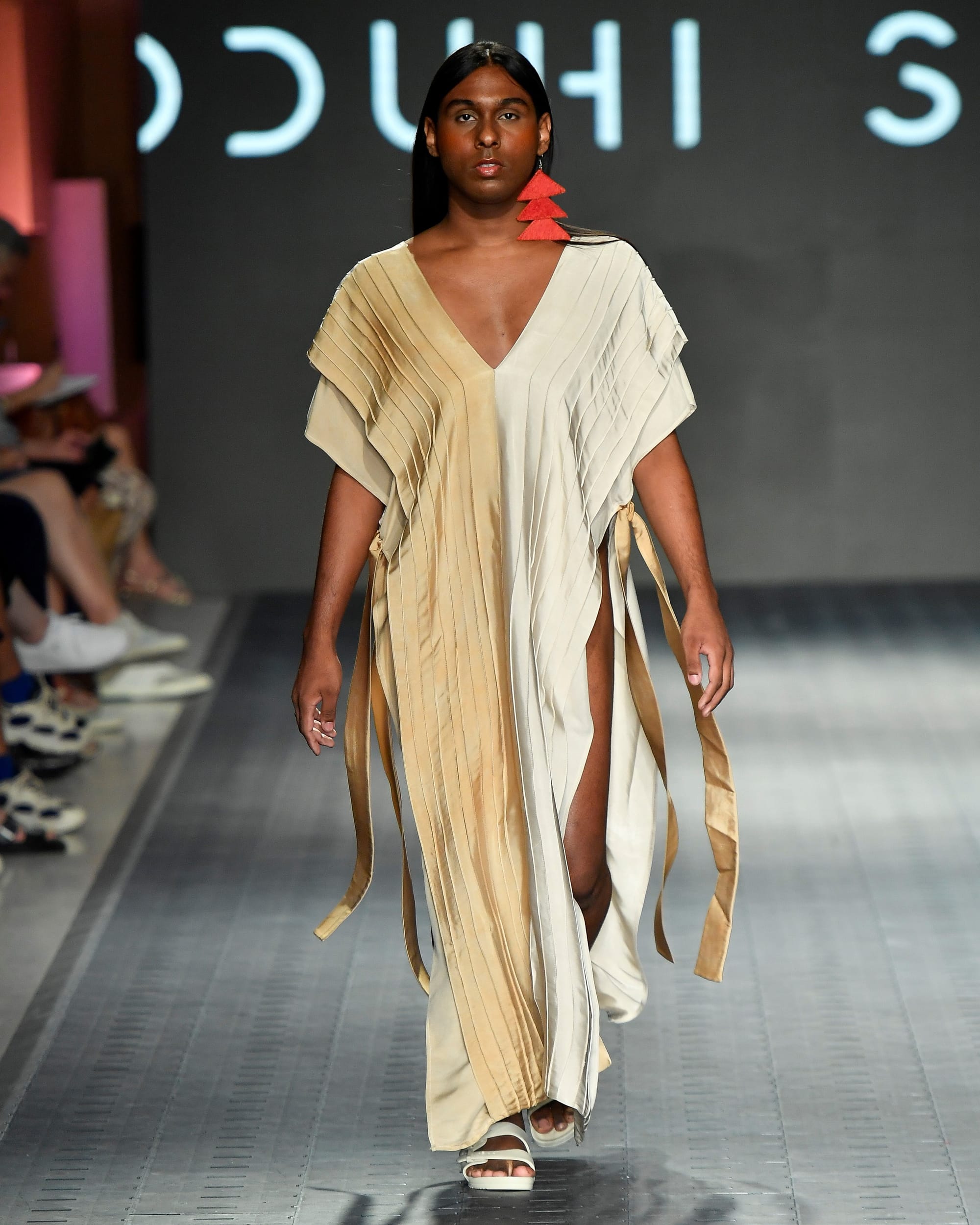
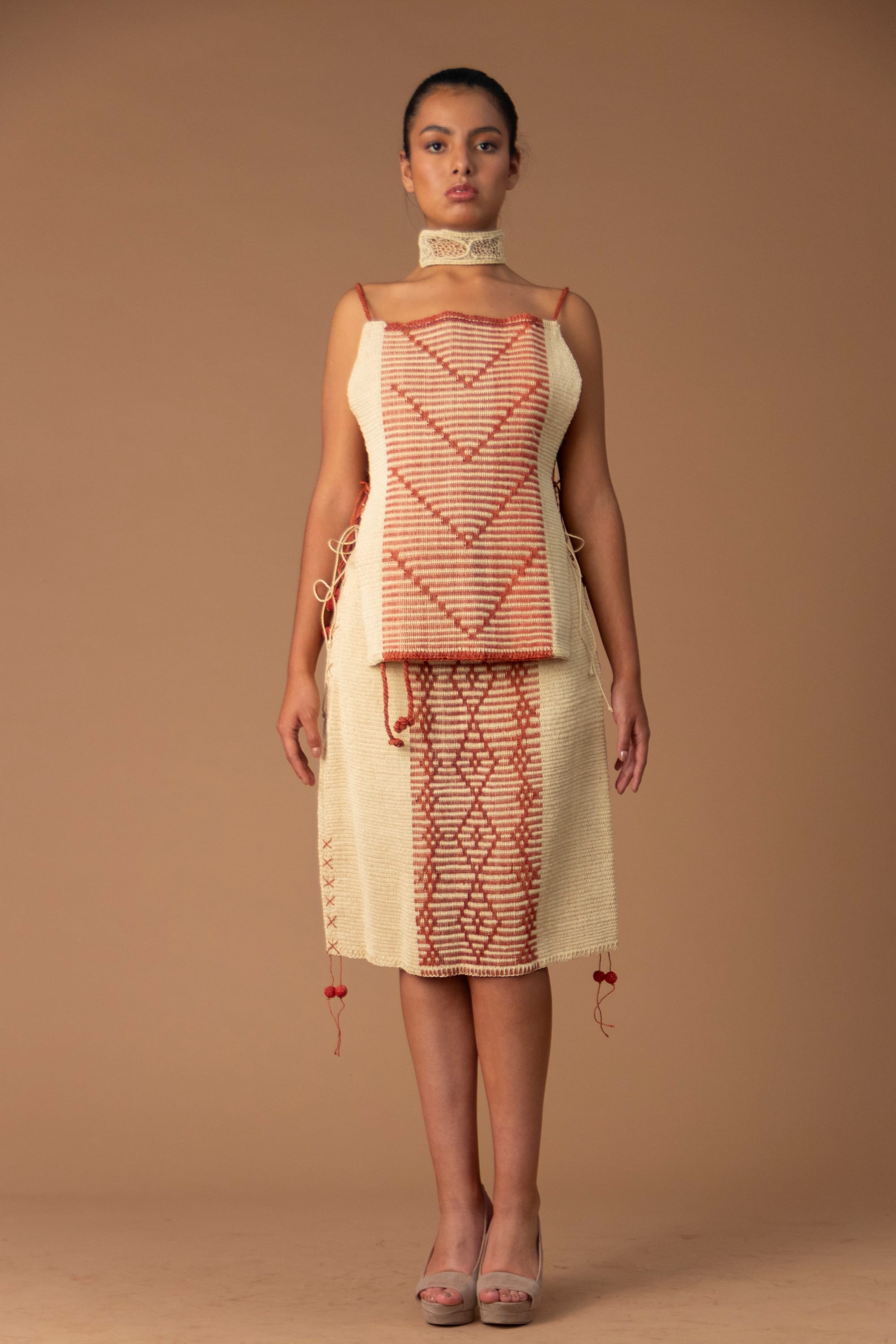
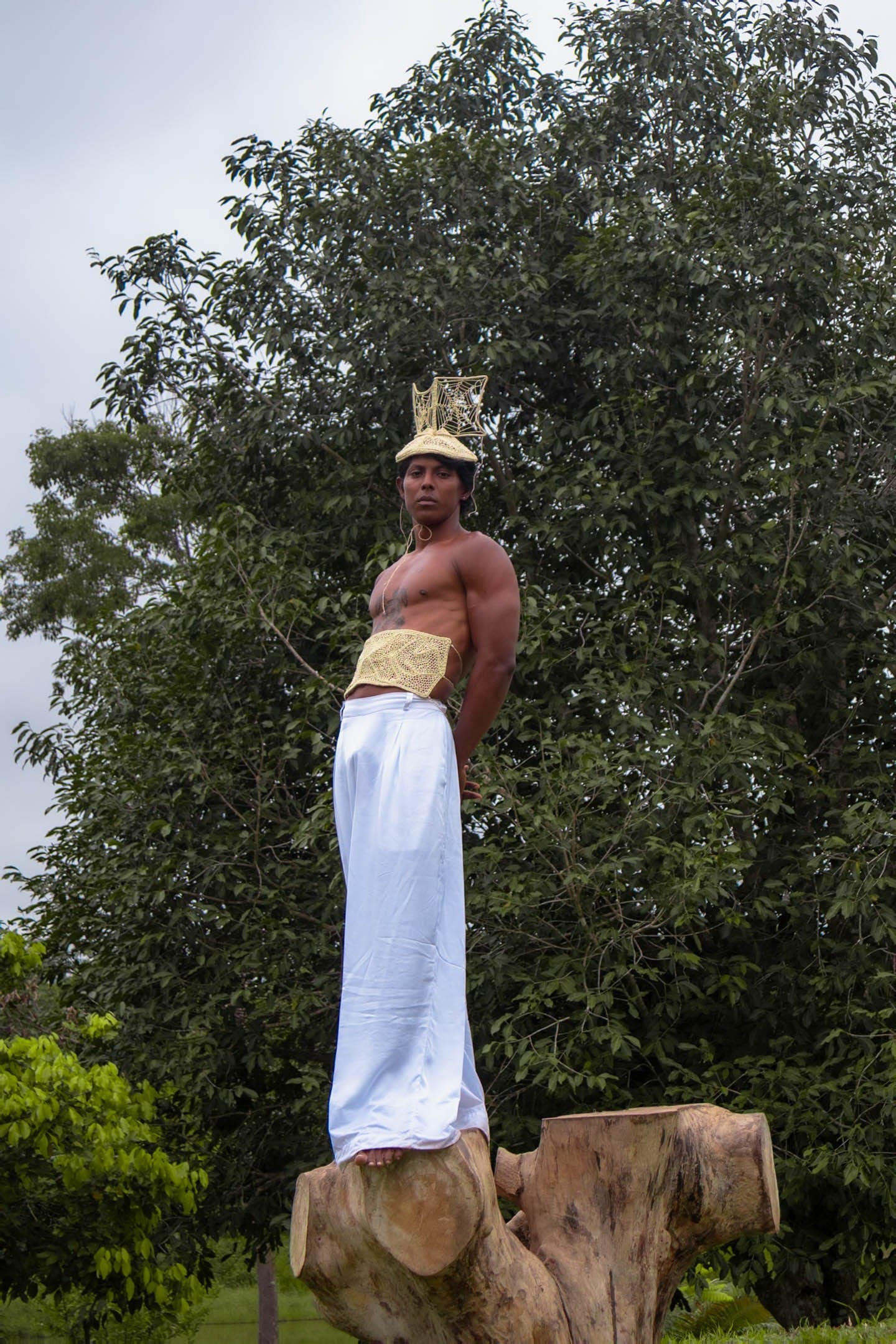
The materials come from my territory, the Alto Rio Negro Indigenous Land. The artisans and family members supply the materials, and the selection process is based on the relationships I have built with the associations. This is the case with tucum and tururí fibers and the supply of ManioColor pigment.
Are there traditional Amazonian techniques or cultural practices that inspire your craftsmanship?
Yes, mainly fishing nets. For example, different types of clothing are made using the millenary puça knot.
How do you balance innovation with preserving indigenous knowledge and traditions?
With respect for memory, spirituality, and collective rights. Not everything can be aestheticize
Ethical & Sustainable Fashion
What does “ethical fashion” mean to you personally?
The understanding that we are a collective body, if there is social injustice, lack of transparency, and unfair remuneration. We cannot talk about fashion and not talk about ethics.
“I am also involved with the local, regional, and national indigenous movement.”
Many luxury brands are only now embracing sustainability. What do you think they could learn from your approach?
The importance of understanding that relationships are different, especially in the business world. It's not just about money, but about trust, listening, and horizontality. What's more, if there is a luxury fashion industry, there are humans and non-humans working in different parts of the process.
How do you ensure that your work benefits not just the planet but also the communities around you?
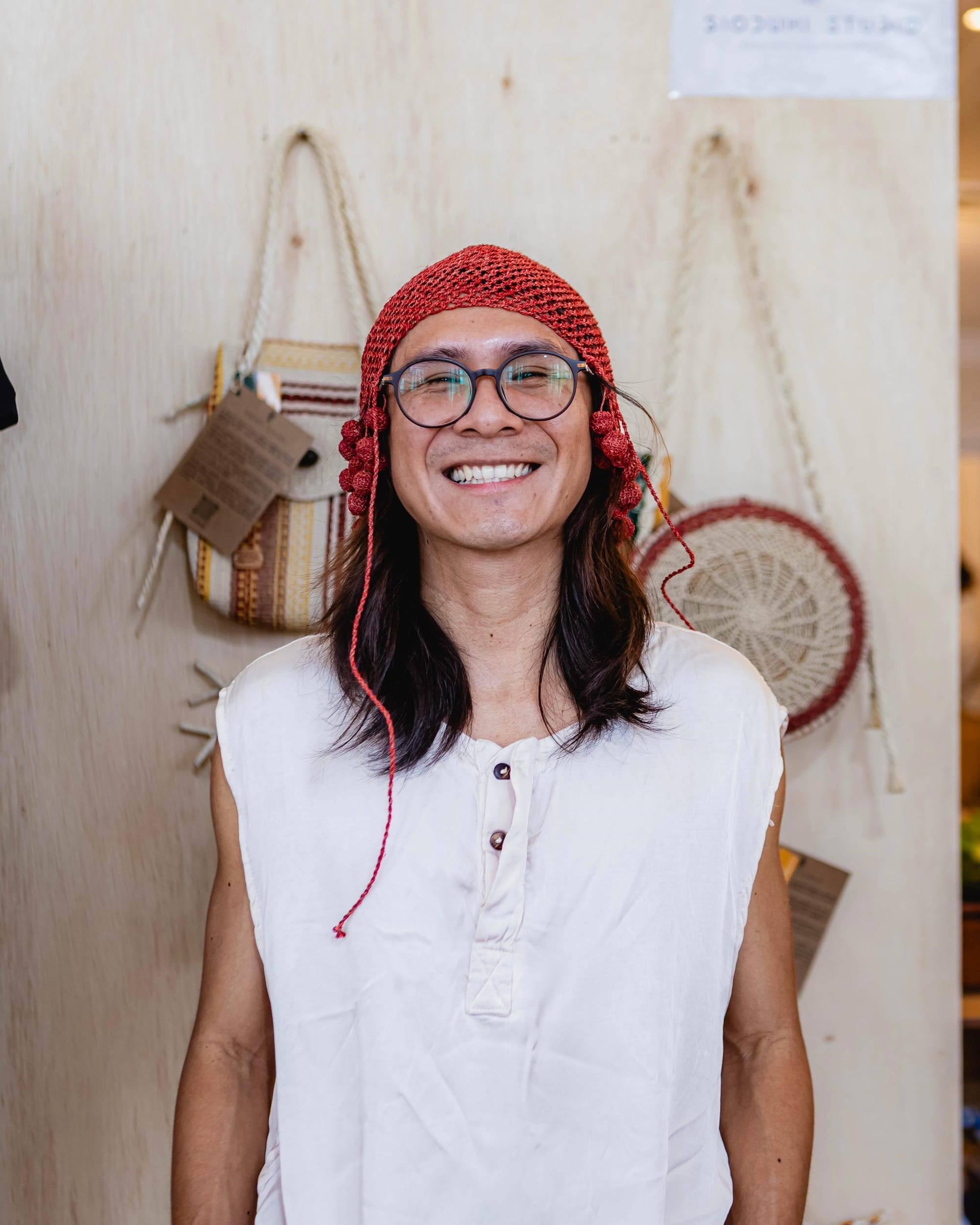
Today, based in Manaus, in the Amazon, I constantly return to my territory, promoting socioeconomic circulation through product development and fair remuneration. I am also involved with the local, regional, and national indigenous movement. I am constantly learning.
Global Relevance
How do you hope your designs inspire consumers around the world?
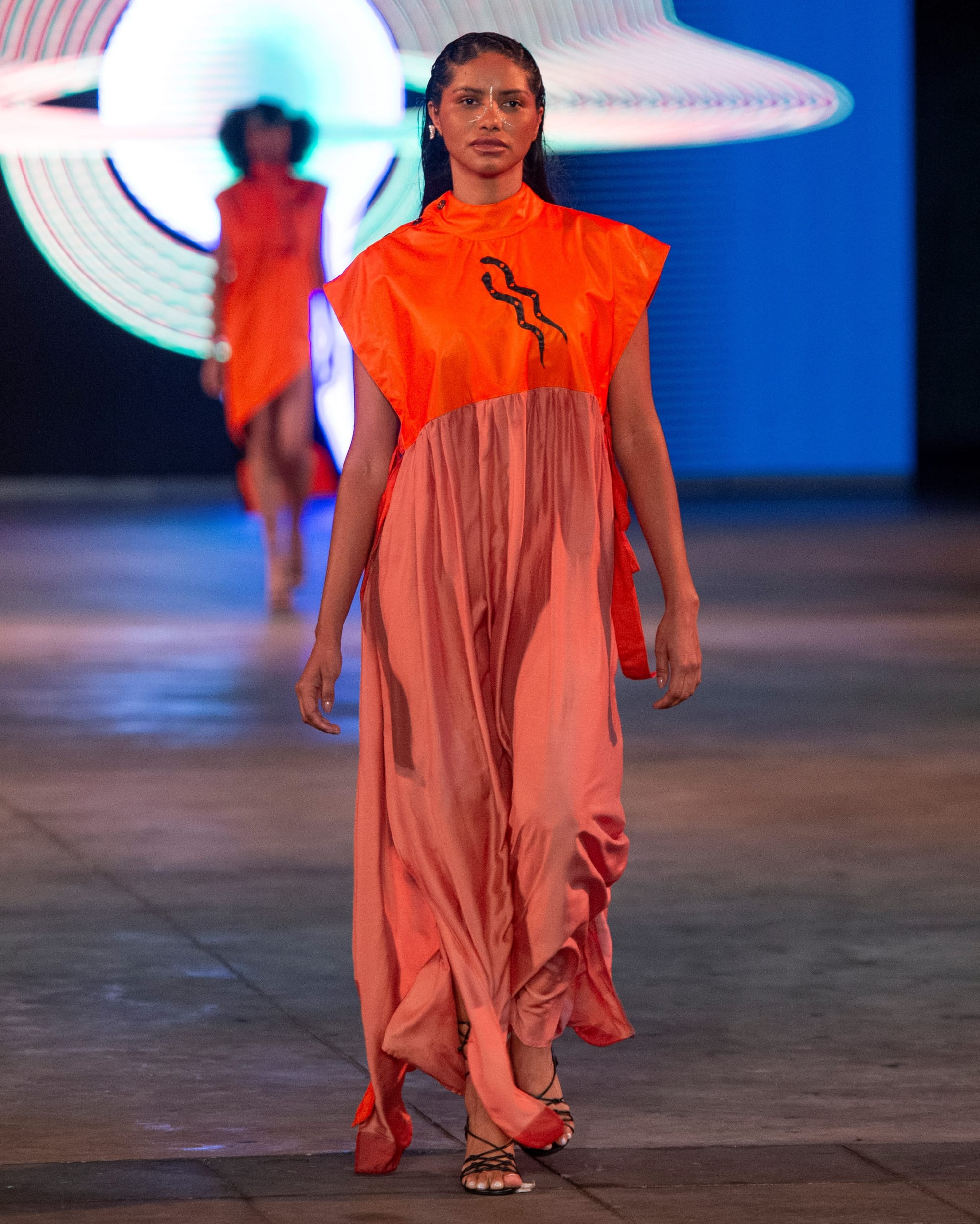
Through incredible, contemporary, and futuristic design. Perhaps by challenging people's expectations of what an indigenous person should be like.
How do you hope your designs inspire consumers around the world?
Through incredible, contemporary, and futuristic design. Perhaps by challenging people's expectations of what an indigenous person should be like.
What message do you want people to take away when they wear your creations?
In addition to developing attractive creations, it is important to remember that we indigenous people continue to resist and keep up with the spirit of the times. Beyond aesthetics, we have incredible stories to share with the world.
Looking Ahead
What is your vision for the future of ethical fashion in the next 10 years?
To publish impact and transparency reports on a regular and ongoing basis. In addition, to found a school of design and architecture in my region, which would serve as an observatory of practices to contribute to ethical fashion.
Do you have any upcoming projects or collaborations you are excited to share with us?
In December, we will be launching a new collection at Casa de Criadores fashion week in São Paulo, Brazil. The collection is about the knowledge of astronomy among the indigenous peoples of the Alto Rio Negro.
Contact info: